At the Ecclesiological Investigations conference in Thessaloniki, Greece, I presented a comparative study of how two major Chinese theologians—T. C. Chao and Watchman Nee—received and contextualized the Nicene Creed in the search for ecclesial unity.
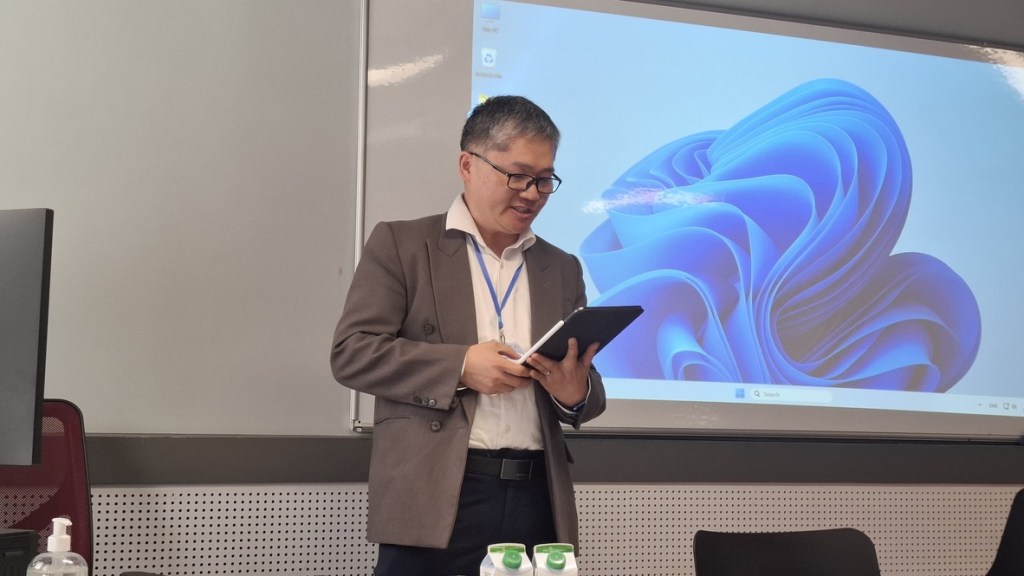
The paper
“The Nicene Creed and Its Impact on Modern Chinese Christianity in Search of Ecclesial Unity: Watchman Nee and T. C. Chao as Case Studies Toward a Constructive Ecclesiology for the Third Millennium.”
Abstract
The Nicene Creed has made a lasting impact on Chinese Christianity since its initial arrival in China during the seventh century. This paper examines two significant Chinese theologians, T. C. Chao (Zhao Zichen, 1888–1979) and Watchman Nee (Ni Tuosheng, 1902–1972), focusing on their perspectives regarding the Nicene Creed. The paper contends that, in their pursuit of ecclesial unity, both Chao and Nee engaged in a creative contextualization of the Nicene Creed, despite their generally negative views on creeds and, specifically, the Nicene Creed, albeit for distinctly different reasons. Regarded as “the most important Chinese theologian of the twentieth century” and described as “a true ‘Renaissance Man’ in the Chinese sense” (Philip L. Wickeri), Chao experienced several significant transformations in his theological assessment of the Nicene Creed. During his early “liberal” phase (1917–1936), Chao critiqued the Creed for its “unscientific” nature; yet he proposed an alternative “creed” that emphasized ecclesial unity in a “spiritual,” or ethical, sense. In his later “traditional” phase (1936–1950), Chao adopted a more sympathetic stance toward the Creed, while increasingly relying on God’s work and the ecumenical movement to foster ecclesial unity. Considered one of “China’s three mighty men” (Leslie Lyall), Nee maintained a consistent perspective on the Creed: sympathetically, he acknowledged its importance in the fight against the Arian heresy; yet critically, he contrasted it with Scripture, viewing the former as partial and the latter as the complete revelation of God. For Nee, the Creed ultimately undermined ecclesial unity; instead, he advocated the model of “one city, one church,” drawing on his interpretation of Scripture as a way to practically embody the unity of the Body of Christ.
Event
- Event: Ecclesiological Investigations conference
- Venue: Thessaloniki, Greece
- Date: September 2025


Leave a Reply